Festivals
Hindu festivals
Raksha-Bandhan
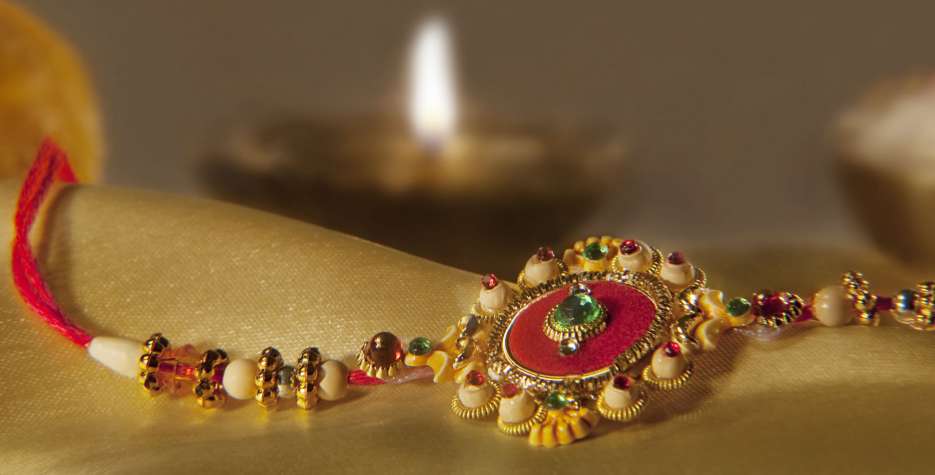
Raksha-Bandhan falls on the full-moon day of the Hindu month of Shravana. Our wise old sages have nurtured and kept alive our cultural traditions bearing good and benevolence of the society at heart. Love and purity which are the reflections of relationships between a brother and a sister have been kept alive by the Raksha-Bandhan festival which is celebrated universally in Hindu homes.
Most of our relations have some expectations in return, but the relationship between brother and sister is unique and completely selfless, impartial and pure. On this auspicious day every sister sends out a rakhi or some thread showing love and affection towards her brother and prays for his welfare and happiness. Even an iron-willed, strong person is unable to resist or refute this blessed symbol of bondage. It is not just a piece of colourful string but represents good conduct, restraint and pure love, It is a welcome bond illustrating significance of love which is an inspiration and encouragement for the brother to progress and prosper in the journey of life.
Hindu culture has thus given a respectful place to women in the society. This festival illustrates how venerable a Sister is to a brother.
On this auspicious day, the sister gets up early in the, morning, puts on her best clothes and goes to her brother. She greets him, puts on a tilak on his forehead, lights a deepak and ties a rakhi on his right hand wrist. She then gives him a piece of sweetmeat to eat. The brother accepts the bond of love and protection and gives a gift to his sister as a token of his love for her.
Hindu tradition has thus sought to preserve purity and sanctity in the attitude arid outlook of brothers towards their sisters.
The festival of "Raksha Bandhan" is of great significance to a brother and sister. If the brother is far away, then the "Rakhi" is mailed and if he is in proximity, the sister visits him to tie the "Rakhi". We bow our heads to the wise old sages who have made us realise the sanctity of the brother-sister relationship
Janmastami
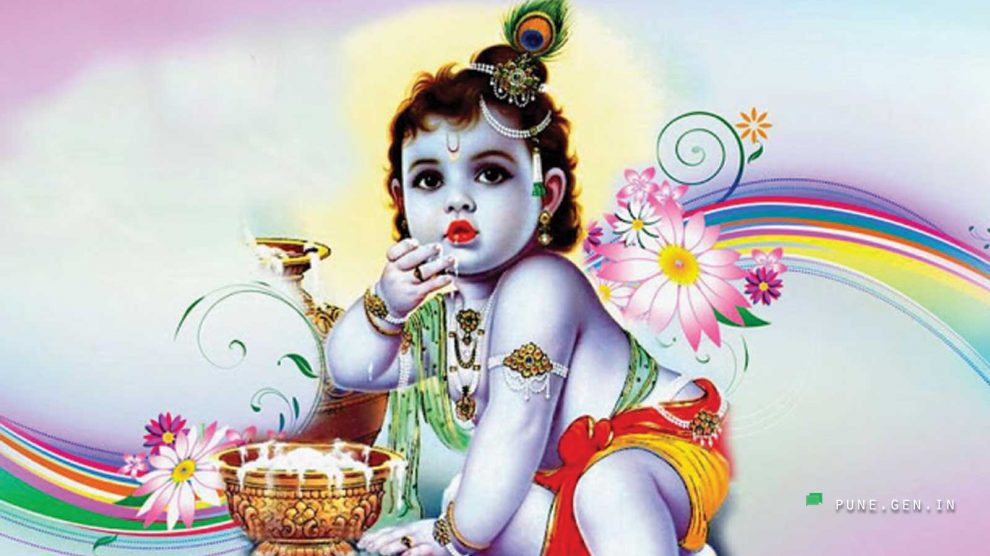
Janmashtami is celebrated on Shravana Vada aatham which falls in the month of August. It was on this day that the dynamic incarnation of Vishnu, in the form of Krishna, took birth. The incarnation of Krishna is stated to be Purna-avatar or full manifestation for he displayed all the qualities and virtues of a perfect being. Every aspect of Krishna's Life and deeds has a mystic symbolism indicating a sublime truth. His life reflects such a vast panorama of actions, as social reformer, mystic yogi, server of devotees, philosopher, statesman, etc., indicating His Perfect Manifested Form.
His was such an exemplary life that everyone who came into relationship with Him, was able to feel at one with Him. Through the playing of the flute, He used to pour out His divine love for all and all those who heard Him, went into a trance. The enchanting music emanating from the flute of the Lord is the bliss of Godhood enjoyed by the man of Realisation. He was an ardent supporter of the higher civilisation of the Devas and therefore all the Kingdom which had dictatorial hierarchies and practiced marginal rites and rituals of the left hand path were toppled by Him. These included the Kingdoms of Kansa Jarasandh, Shishupala, Narkasur, Kalayavan, and Duryodhan who were all very powerful.
In the Bhagawad Gita, He gave out the message of true Dharma as the charioteer of Arjuna. By holding the Sudarshan Chakra of Dharma and righteousness. He gave mankind a grand vision of life. Krishna gave Arjuna the entire philosophy of life in the eighteen chapters of the Gita and towards the end of the eighteenth chapter told Arjuna "I have declared the highest wisdom to you; reflect upon it and act as you choose to". He gives the choice to Arjuna and the same choice is given to each one of us in living our lives.
There is no peace in this world which is full of vices and dictators. "Geeta" should be given the honourable place of mother civilization in such wicked environment. "Geeta" is capable of being the world mother, as it is free from the narrow-mindedness of this traditional society. And so "Geeta" is for all. Therefore, this day should be celebrated, not just by fasting, but by practicing the message of "Geeta".
Salutations to Purna avatar-Shree Krishna.
Navratri
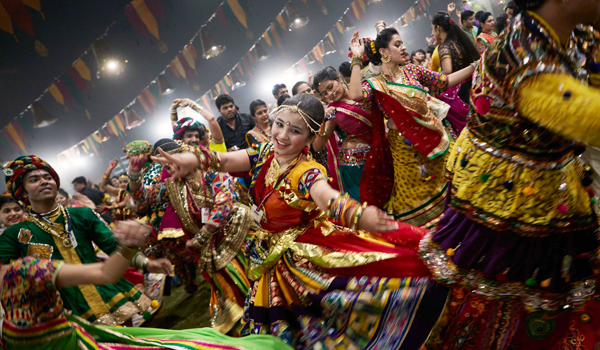
The festival of Navratri is celebrated in the month of Aso i.e. Ashwin approximately between 15th of September to 15th of October. This festival is celebrated in order to worship the Goddess Shakti. In many places, this festival has been split into three categories, i.e., three days for the worship of Ma Durga, for strength and power, three days for Ma Saraswati for knowledge and three days for the worship of Ma Laxmi for wealth and prosperity. Therefore, Navratri is a long festival celebrated continuously for nine days.
During this period many people fast by taking only fruit and milk and at many places yagnas' take place as a form of worship.
There is a well-known tale behind this festival. In ancient times, a demon called Mahishasura had been harassing the Devas and humans. The Devas convened and prayed to Brahma, Vishnu and Mahesh. Due to their anger on Mahishasura, a Divine Energy was generated. The Devas and humans welcomed it with chants and worshipped it. The Gods instilled this Energy with their own Divine attributes. This Divine Energy, termed Shakti fought a continuous battle with the Demon for nine days. She managed to defeat Mahishasura and killed him. Thus, both the Devas and humans were greatly relieved.
It is the Divine power of Jagdamba or Ma Durga, which we worship during Navratri. A look at history shows us how evil forces have continually overpowered the good thoughts. To escape from the grip of evil, those possessing Divine thoughts have always been at war with them. To overcome this, people have given up their comforts and have prepared themselves for difficulties, which have come their ways. This too is a form of penance and worship. This victory of good over the evil is God's gift to humanity.
Although this festival is celebrated each year by traditional dances called Raas Garbas, where children, men and women get together for a joyous time, It is also important to remember that this is the time to worship Ma Jagdamba for shakti and enrich their lives with the Divine Power to combat their inner enemies. To establish a healthy society is also a message of this festival. A man on the wrong track can tread the right path if he sees all women as Ma Jagdamba. Women have a definite role in society and to awaken in them the latent power is also the aim of this festival. She should be aware of the power of creation she possesses and should not forget her role as a mother and be proud to fulfill this role with dignity.
Diwali
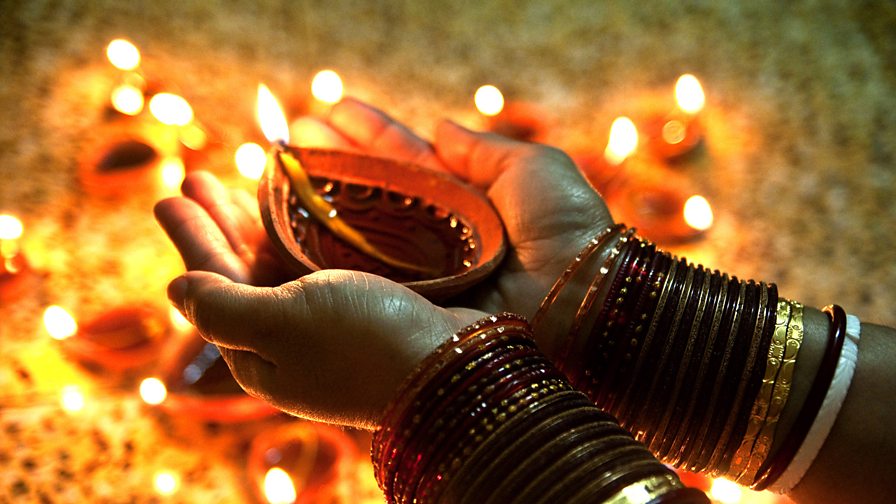
Diwali is a very important festival for Hindus. It marks the last day of the Hindu calendar. Dhan Teras, Kali Chaudas, Diwali, New Year and Bhai Bij are the five important days, which are celebrated as the festival of Diwali.
Though Diwali is a social festival, it also has a religious significance. On the day of Kali Chaudas, i.e., the day preceding Diwali, Sri Krishna attained victory over a giant called Narakaasura by killing him and thus relieving the people from his tyranny. To celebrate this victory, Hindus light Deepaks and in this way Diwali is celebrated. When Rama attained victory over Ravan and returned to Ayodhaya with Sita, the people of Ayodhaya became very happy and were delighted to welcome Rama and Sita. They cleaned their houses, made colourful designs on the floors called 'Rangolis' in front of their houses, and decorated the whole city of Ayodhaya. Strings of lighted deepaks were strung everywhere. In this manner, the return of Rama and Sita to Ayodhaya is also celebrated in Diwali.
On this same day, the Jains celebrated the attainment of Nirvana by Lord Mahavir. It is easy to defeat an outside enemy, but it is very difficult to defeat the inner enemy lying in us. Greed, anger, envy, animosity are some of the enemies within us. Anyone who is able to attain victory over these inner enemies is called Mahavir'. For Jains, this day is of great significance.
Swami Dayanand, the founder of the Arya Samaj, brought knowledge to people who used to believe in superstitions and had blind faith. The Arya Samaj celebrates Diwali as the Nirvana day of Swami Dayanand.
Swami Ramtirth left this physical world on this day.
In this manner many different religious leaders are associated with this day and thus all Hindus celebrate Diwali.
On Diwali day, the business people worship the Goddess of wealth and prosperity. It is not right to disregard or abuse wealth. Wealth is worshipped, as it is counted a blessing of God. By putting wealth to good use, one can help the welfare and well being of the whole of this world. Anyone misusing wealth will bring loss and damage to others as well as to himself. Thus wealth is considered as a type of energy and its good use will bring an end to the effects of evil forces.
In this manner, Diwali is the most important for Hindus. It is the occasion of cleanliness and light. Houses are decorated with lights and Rangolis. Crackers resound and light up the sky. Everyone is adorned with new and bright clothes. Sweets are exchanged. However, these are outer celebrations. If with these outer celebrations, we light our inner beings, if we clean our hearts, make them pure and full of love for others, if we become humble and consider the welfare of all, then the celebration of Diwali will become beneficial to us as well as the community.
We pray that this year's Diwali will light our hearts and send out loving rays for all.
New Year
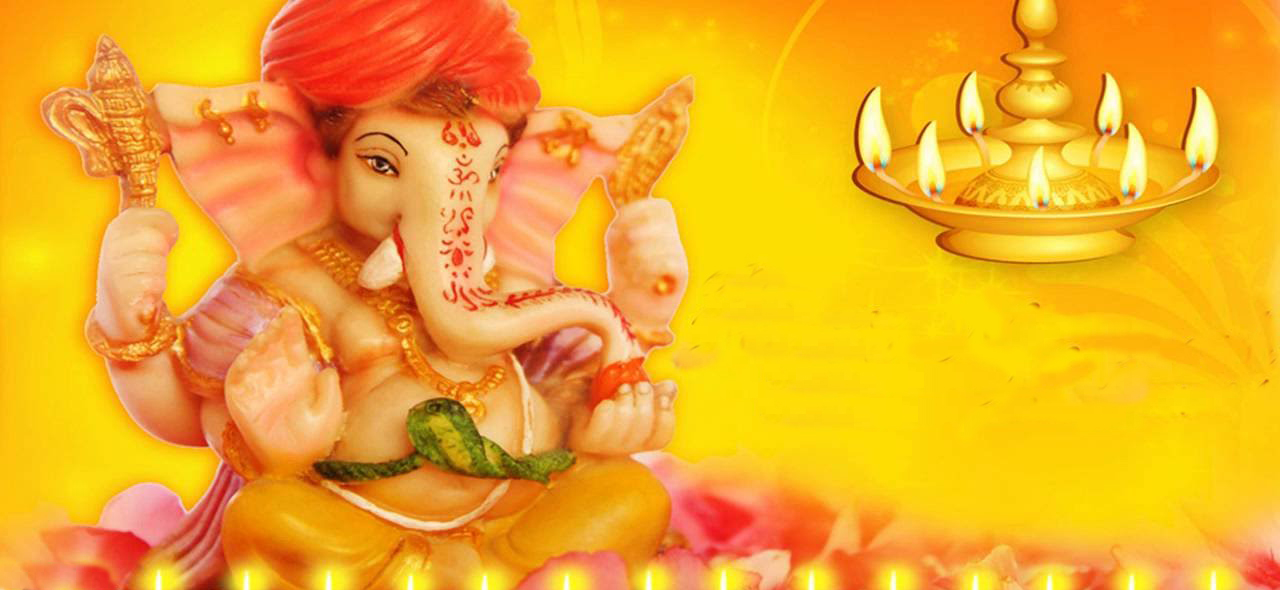
The Hindu New Year commences with the first day of the bright fortnight of the month of Kartika. This day is considered an auspicious occasion and has a historical significance as well. It commemorates the victory of the great King Vikramaditya after whom the Hindu calendar is named. Our great ancestors have considered it a dawn of a new era from where the days, months, and years have been marked as "Vikram Samvant". Today over 2000 years later we still celebrate the day with great joy and happiness.
To welcome this day, preparations are begun a couple of months in advance - houses and surroundings are tidied up, redecorated, women-folk busy themselves in the preparation of a variety of delicacies, shopping activities of women, men and children appear to be increasing with purchases of new clothes, toys, sweets and gifts for one another. Thus the town seems to be vitalised with activities: shopkeepers and businesses flourish and everywhere joy and gaiety are seen to abound. On New Year's eve, people decorate the entrance of their houses with colourful designs called "Rangoli", flowers, buntings, etc. On New Year's Day everybody wakes up early, gets ready and dresses up in his/her best, respectfully greets elders and seeks their blessings and then sets off to visit relations and friends to exchange gifts and best wishes to auger New Year. In the larger cities people gather at community social centres to meet and convey to each other New Year's greetings and dine together or exchange sweets. Thus the atmosphere is jovial and gay in anticipation of ~ year of happiness and prosperity.
There are a couple of mythological stories associated with this day. When our social order classification based on vocations came under jeopardy with interference of King Bali, he was destroyed by Lord Vishnu in his incarnation as Vaman Avtar. Though King Bali was a bad man he was a charitable person and could see virtues even in a bad person. Thus this story encourages us to develop the quality of seeing good qualities even in a most wicked person.
In the Vaishnav Temple people worship Mount Govardhan and present a display of various delicacies at the altar as "Annakutt". In Vrindavan Gops and Gopis were preparing to offer sacrificial worship to lndra for invoking his blessing for rain but Krishna stopped them and explained that rains were not due to Indra so they stopped the sacrificial worship to Indra.
lndra was very annoyed at this and started a heavy downpour to flood and sink Gokul. Krishna raised and held Mount Govardhana on his small finger and sheltered the Gops and Gopis and their livestock, cows and other animals and birds for seven days. At last Indra accepted his defeat and apologised to Krishna. From this day the worship of Govardhana was introduced and on this day "Annakut" is offered to the Deity in the temples. The prasad of Annakut is then distributed amongst the devotees.
The real celebration and significance of this day will only be realised when we purify ourselves by lighting the lamp of knowledge and driving away the darkness of ignorance.
Holi
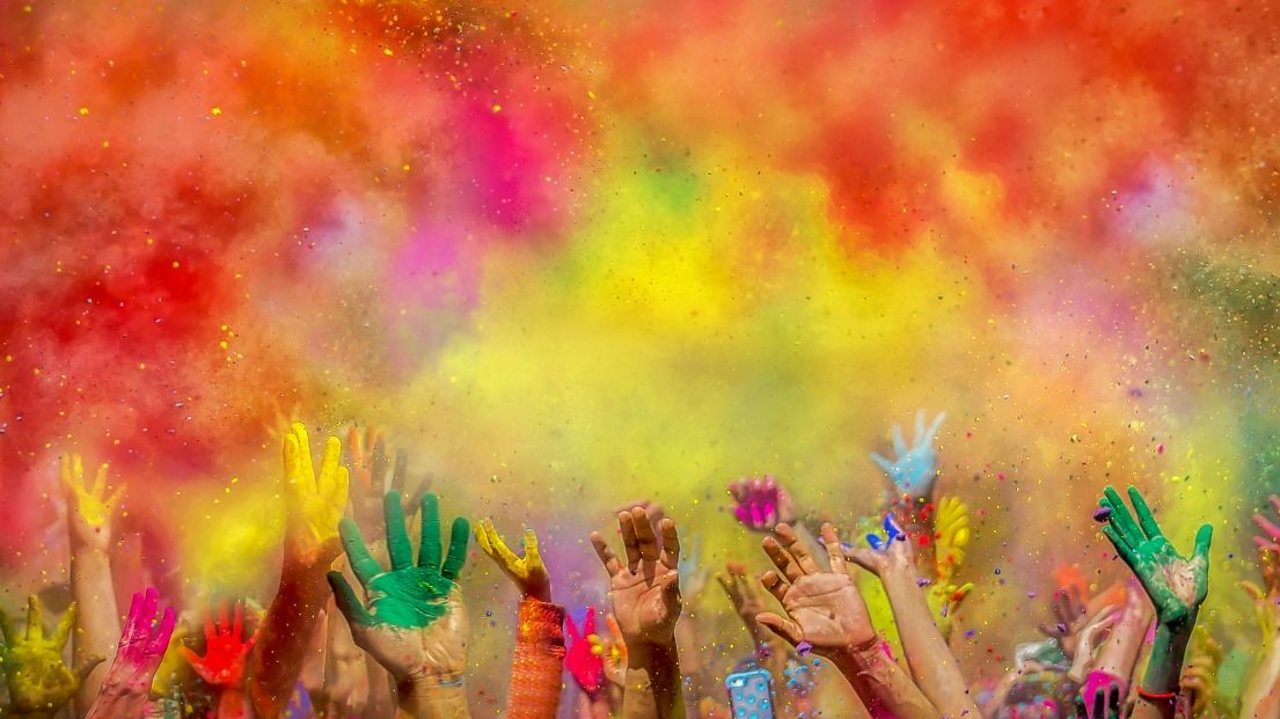
The festival of "Holi" is celebrated on the full moon day of the Hindu month of Phagun. This is the time of Spring in India and nature is at its best. Trees, shrubs, and the beautiful, blossoming flowers naturally awaken youthfulness and romance in the human hearts normally entrenched in a mundane routine. None the less restraint and courtesy should be observed in during the fun and the festivities.
There is also a mythological significance of 'Holi" - a son like Prahlad, a great devotee of the Almighty was born to a demon Hiranyakashyap, who believed himself to be God. He was unable to convert his son Pralhad to accept him as God and contrived to kill him. He did not succeed in his attempts and so, finally tried to burn him alive while being seated in the lap of Holika, the demon's sister, who had a boon that she would not be burned by fire, only if she did not harass any person of good conduct. When Holika sat in the fire with Prahlad, she was burnt to ashes while Prahlad was not at all affected by the flames. The moral is that there may be a very small minority of morally upright people, but as long as they have faith in God and have good of all at heart, then they will not be harmed, in spite of the evil around them.
When the Almighty's faithful devotee Prahlad came out of the fire smiling and alive while Holika was dead, the people were filled with joy. Happiness of the people was boundless, they danced with joy, forgetting their status, class, age, etc. They sprinkled and sprayed 'gulal' and different coloured powders and sprayed one another with coloured water. Thus this festival occupies a unique place in the Hindu tradition and life.
As is customary, we should not only discard our worn out clothes in the flames of "Holi", but also all evil qualities like animosity, jealousy, temptation, greed, anger, etc. Thus worshipping "Holi" every year, one should establish love, unity and co-operation in one's heart and help in reconstruction of a prosperous and healthy society.
Shivratri
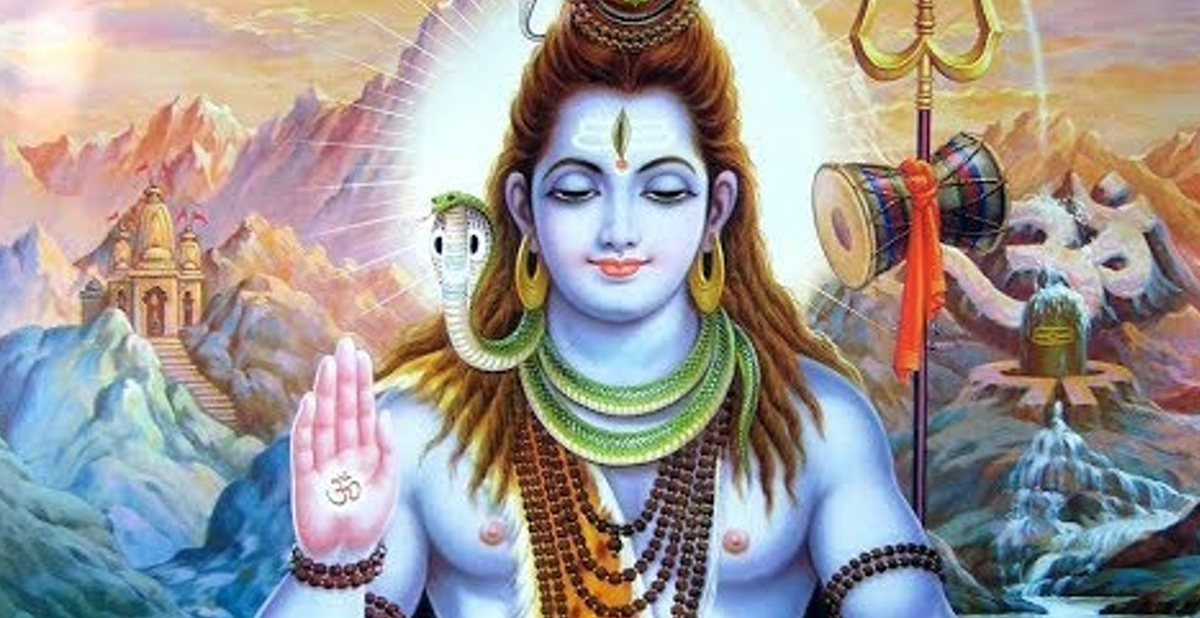
The festival of Shivratri falls on Mahavad Chaudas which falls in the months of February or March according to the English calendar - Lord Shiva is one of the Gods of the trinity. He is a jnana yogi who provides an example of how a person treading the path of knowledge should display the qualities of love, dispassion and selfless service. Lord Shiva sits in a meditative pose on Mount Kailash against the background of the snow capped Himalayas. His posture symbolises perfect inner harmony and poise, experienced by a man of realisation. He is rooted in God - consciousness and revels in the bliss of transcendental Reality. The vicissitudes of nature, challenges of life, the trials and tribulations of the terrestrial world do not affect Him at all. He maintains perfect serenity, equanimity and tranquility in all environments and circumstances. Being unaffected by the pull of senses He is the King of Yogis.
The pure white snow symbolises the absolute purity of mind. The trishul or trident symbolises the destruction of the ego with its three fold desires of the body, mind and intellect. It also represents elimination of the three gunas - sattwia, rajas and tamas, and the unfoldment of the Supreme Self. The symbol on His forehead inspires people to become 'Karma Yogis'. The swallowing and digestion of the poison 'halahal' suggests the readiness of a janana-yogi to suffer for the well being of the world. His association with the cremation grounds is symbolic of freedom from fear of death. To such a King of Kings and Yogi of Yogis, our eternal obeisances.
Hindu Festivals and current calendar
Hindu culture and meaning of religious symbols
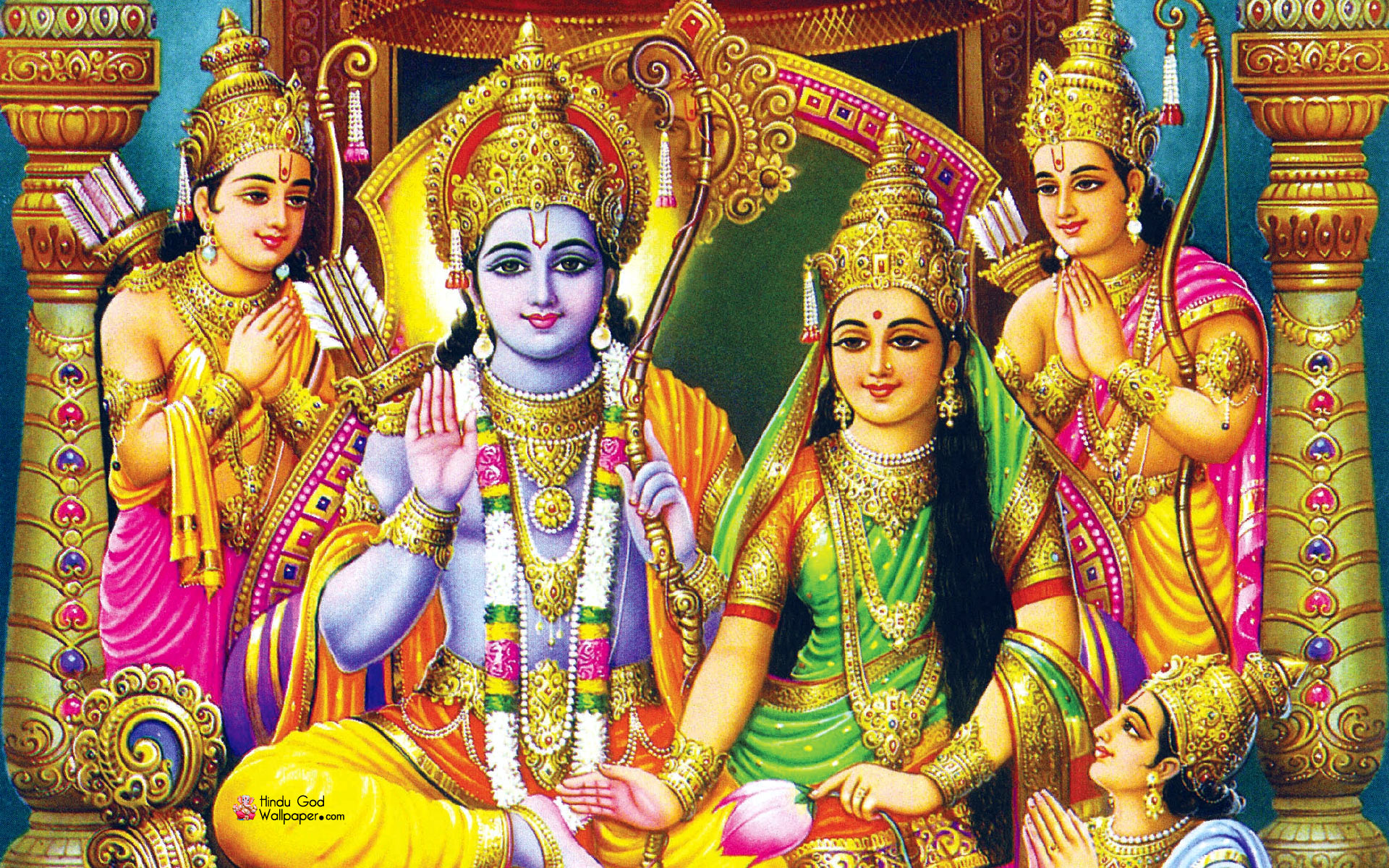
Articles about our gods and godesses

Articles submitted by community members
Hindu calendar 2019